Implementation
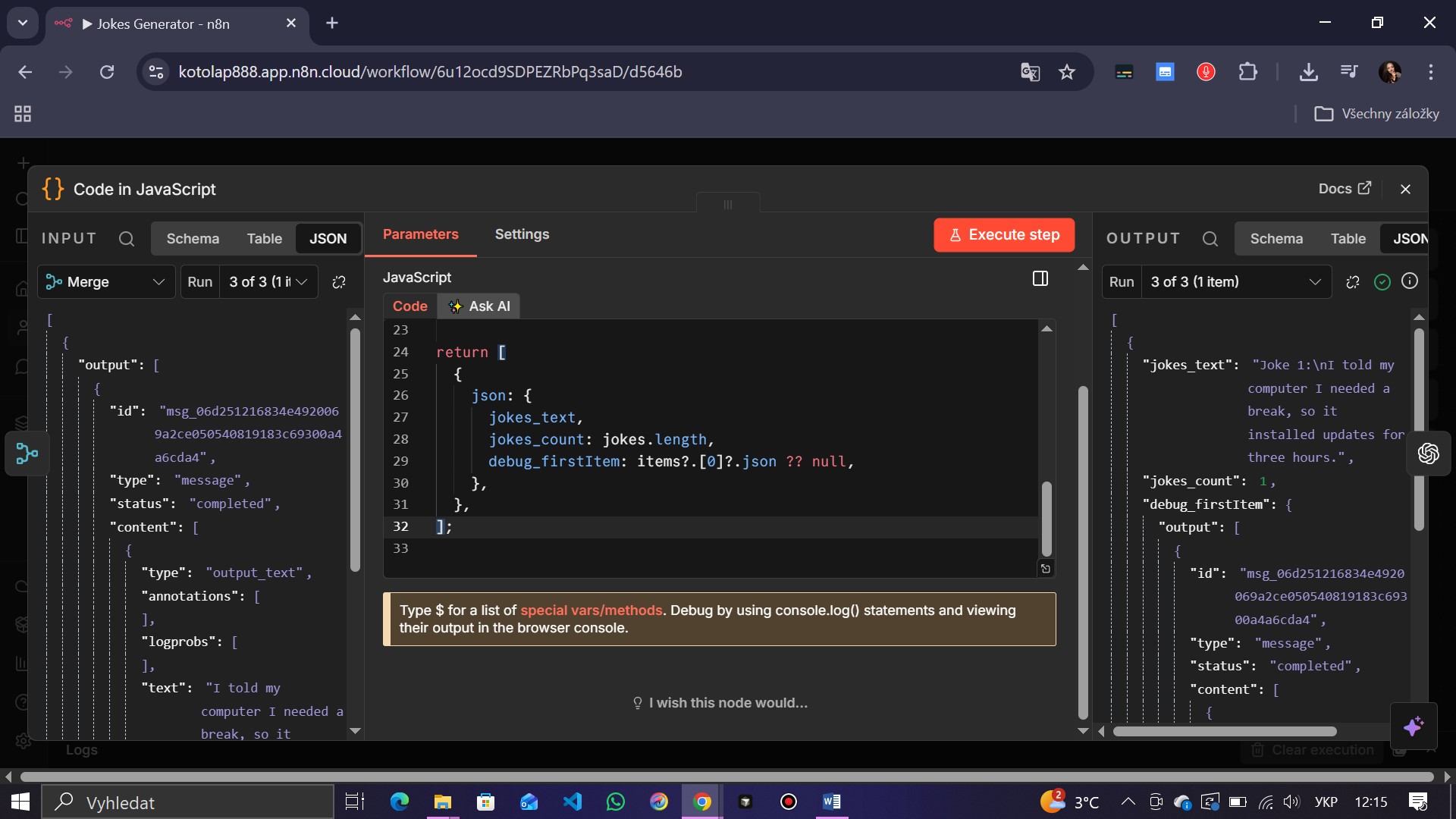
Workflow orchestrationImplemented a multi-step orchestration workflow in n8n: Manual Trigger → 3 parallel GPT-5-mini nodes → Merge (append) → Merge (final) → GPT-5 judge with structured result.
- Generation layer: 3 parallel prompts, each returns output_text
- Aggregation layer: Merge (append) ensures exactly 3 items reach the judge
- Evaluation layer: GPT-5 scores each joke and selects best #N with reason
- Pattern: self-consistency sampling + AI-as-judge
GPT-5-mini Prompt (Generator)
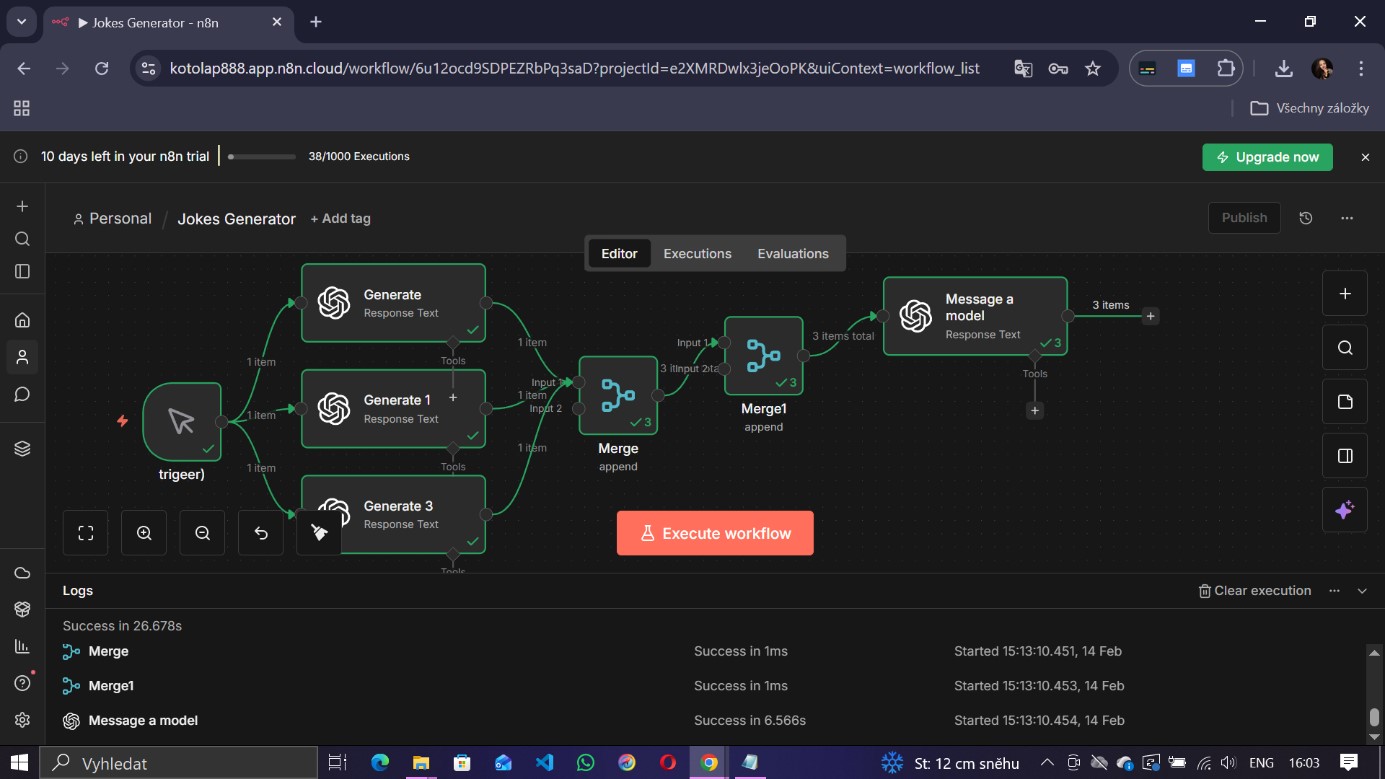
Generate 1 short joke (max 5 sentences).
Make it genuinely funny, unexpected, and playful.
Clean and safe.

Output ONLY the joke text.
Expected items after Merge
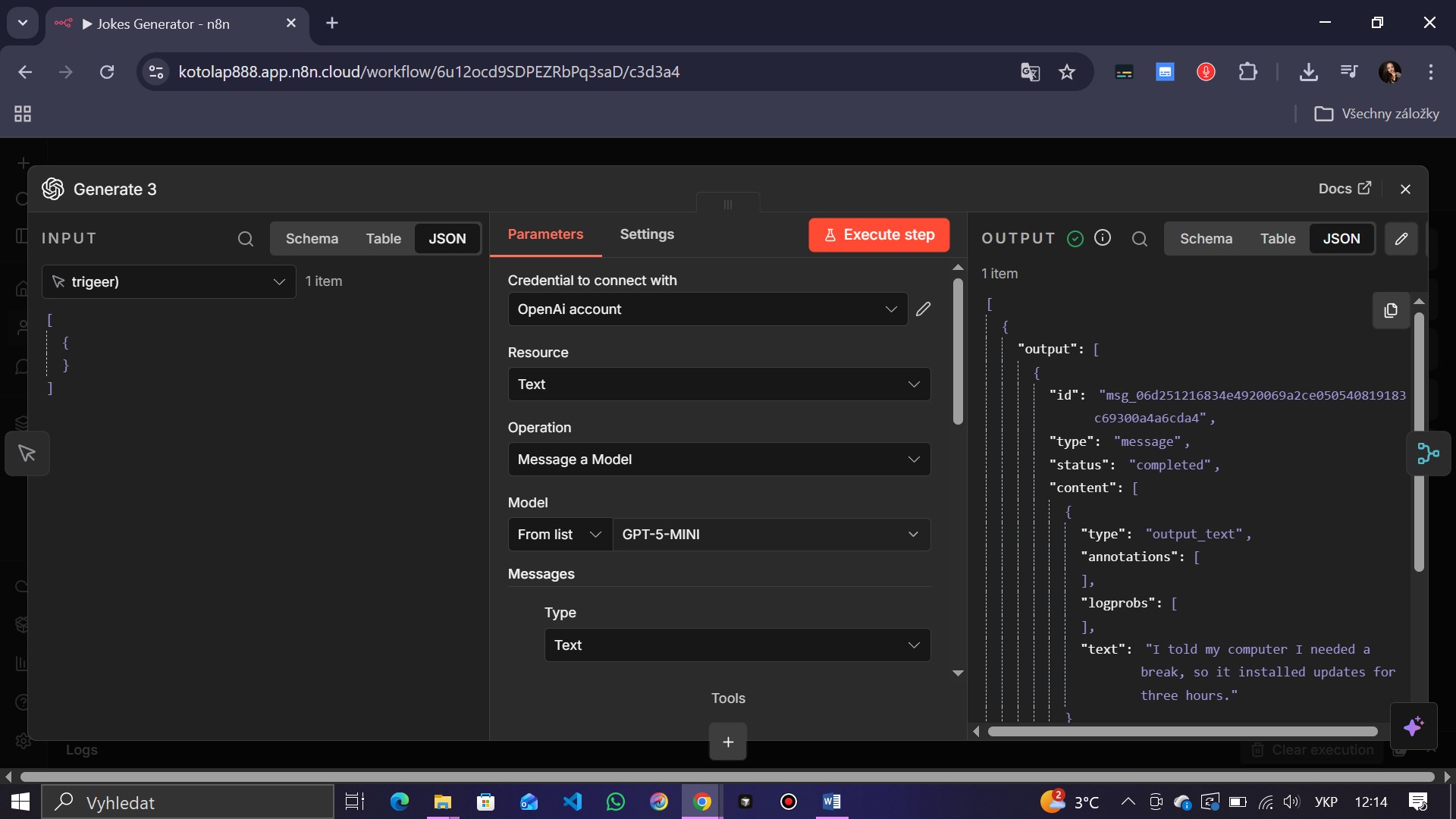
[
  { "output_text": "Joke #1..." },
  { "output_text": "Joke #2..." },
  { "output_text": "Joke #3..." }
]
GPT-5 Judge Prompt
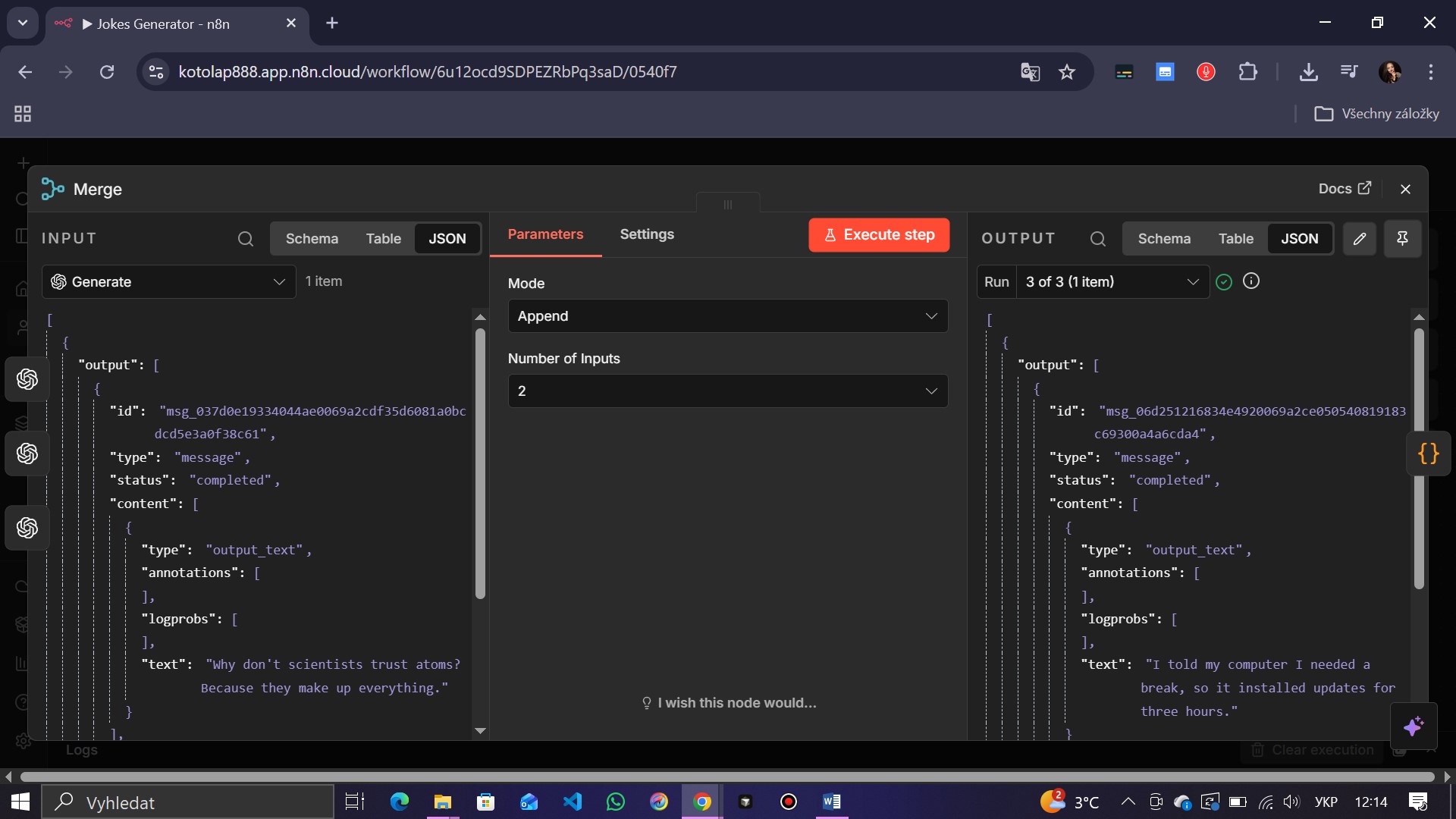
You will receive 3 items.
Each item contains one joke in field "output_text".

Score each joke 1–10.
Pick the best one.

Return structured result:

Joke 1 (score X/10)
Joke 2 (score X/10)
Joke 3 (score X/10)

Best joke: #N
Reason: short explanation